
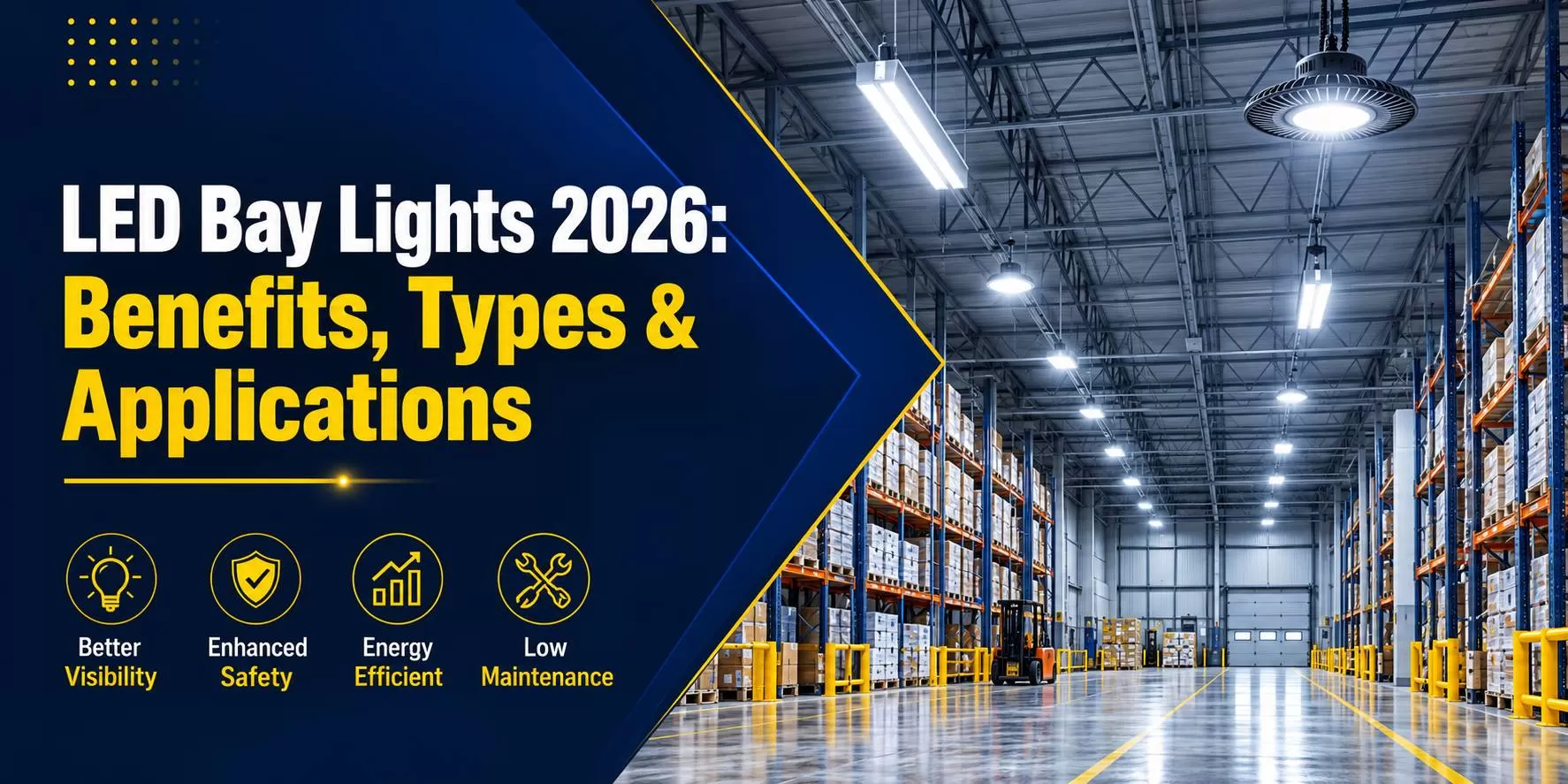
Lighting affects safety, comfort, visibility, and productivity. In large commercial and industrial spaces, the right Bay Lights can make everyday work easier. Bay Lights are designed for areas with high ceilings and wide floor spaces. In 2026, LED technology makes these fixtures an efficient choice for warehouses, factories, workshops, gyms, retail stores, and other large facilities.
What Are Bay Lights?
Bay Lights are powerful overhead LED fixtures used where standard room lights may not provide enough coverage. They are commonly installed in buildings with medium or high ceilings. Instead of filling a large area with many small fixtures, businesses can use properly planned Bay Lights to deliver broad and even illumination.Their design helps reduce dark areas and improve visibility around equipment, shelves, walkways, and workstations. This makes Bay Lights useful in places where people need clear visibility throughout the day.
Why Choose LED Bay Lights in 2026?
LED technology offers several practical benefits. Modern Bay Lights can produce strong illumination while using less electricity than many older lighting systems. For businesses that operate lights for long hours, lower energy use can contribute to better operating efficiency.Long service life is another advantage. Quality Lights can reduce the need for frequent lamp replacement, which can save maintenance time. They are also available in different wattages, beam angles, and color temperatures, giving businesses more flexibility when planning a lighting layout.Lighting is important in dining areas too. A cafeteria light should provide comfortable illumination without excessive glare. A well-planned cafeteria light can make tables, walkways, food counters, and surrounding areas easier to see. The right cafeteria light can also create a pleasant atmosphere for employees, students, visitors, or customers.
Types of Bay Lights
There are several styles of Bay Lights available for different applications. High-bay fixtures are generally used in warehouses, factories, and buildings with tall ceilings. Low-bay fixtures suit spaces with lower mounting heights. Linear designs can provide long, uniform coverage, while UFO-style fixtures are compact and commonly used in industrial locations.When selecting Bay Lights, consider ceiling height, floor size, lumen output, beam angle, mounting method, and the activities performed below the fixture. These details help ensure that the selected Bay Lights provide useful illumination without unnecessary brightness or energy consumption.
Main Benefits
Energy efficiency is one of the strongest reasons businesses choose LED Bay Lights. Good fixtures can deliver high brightness with relatively low power consumption. This is especially useful in warehouses, production areas, and other facilities where lighting remains on for many hours.Durability and lower maintenance are also important. Modern Bay Lights are designed for long-term use and can reduce the frequency of replacements. Businesses can choose different color temperatures depending on whether they need a cool working environment or a more neutral appearance.A cafeteria light should balance visibility with comfort. A cafeteria light with a suitable color temperature can make a dining space feel welcoming. Another cafeteria light benefit is better visibility around food service counters and seating areas. For busy dining spaces, a cafeteria light should also avoid distracting glare.
Applications of LED Bay Lights
The uses of Bay Lights extend across many industries. Warehouses can use them along storage aisles, loading zones, and packing areas. Manufacturing plants can install Bay Lights near production lines, machinery, and workstations. Retail stores, gyms, workshops, garages, and distribution centers can also benefit from wide and consistent illumination.A cafeteria light can be installed in schools, offices, hospitals, factories, colleges, and corporate dining areas. The goal of a cafeteria light is to make eating, walking, serving food, and social interaction comfortable. In larger dining halls, multiple cafeteria light fixtures can be arranged to avoid dark corners.
How to Select the Right Lighting
Start by measuring the room size and mounting height. Think about the activities taking place under the fixtures and the amount of illumination required. When comparing Bay Lights, check lumen output, wattage, color temperature, beam angle, IP rating, warranty, and installation requirements. This cafeteria light can then be matched to the room.For dining areas, a cafeteria light should also be evaluated for glare, color rendering, cleaning, and visual comfort. A suitable cafeteria light should make food and surroundings appear natural and clear. Choosing the right cafeteria light placement can improve the overall appearance of the room.
Installation and Maintenance
Correct installation is important for getting consistent performance. it should be positioned to cover the required area while limiting shadows and glare. Mounting hardware should match the ceiling structure and fixture weight.Routine cleaning can also help maintain brightness, particularly in dusty workshops and industrial spaces. Electrical inspections should be handled by qualified professionals.A cafeteria light should be cleaned regularly because dust and grease can reduce light output. Keeping each cafeteria light clean also supports a neat and comfortable dining environment.
Trends for 2026
Smart lighting is becoming more common in commercial buildings. Some modern Bay Lights can work with occupancy sensors, dimming controls, daylight sensors, and building management systems. These features can help businesses adjust lighting according to occupancy and operating schedules.
Conclusion
LED fixtures provide a practical way to illuminate large spaces efficiently. Bay Lights offer broad coverage, durability, flexible installation, and energy-conscious operation. With proper planning, Bay Lights can support better visibility in warehouses, factories, stores, gyms, and other facilities.For dining spaces, a cafeteria light should focus on comfort, visibility, and a welcoming appearance. A well-selected cafeteria light can improve the experience without creating harsh glare. By considering height, brightness, beam angle, color temperature, controls, and maintenance, businesses can build a lighting system that meets their needs in 2026 with Bay Lights.